

 |  |  |
|---|---|---|
 |  |
BEE HYDRATED
A Behavioral Intervention Design to Reduce Plastic Usage
at Savannah College of Art & Design
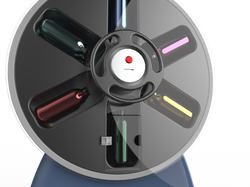
Bee Hydrated is a behavioral intervention design, consisting of a filtered bottle refill station, loan-able reusable bottle dispenser, and bottle return kiosk within the Gulfstream Center for Design.
The experience has been streamlined to intrigue, excite, and relax users by bringing nature and strong aspects of environmental psychology into a highly industrial space within a building that formerly had no common areas.

GULFSTREAM CENTER FOR DESIGN
Gulfstream at Savannah College of Art & Design (SCAD) is home to the school of design's offices, graduate work spaces, and industrial design program, seeing the foot traffic of several hundred students and staff per day. 74% of whom report drinking primarily plastic bottled water. A problem for a building with only one plastic recycling point.
Our team decided that increased recycling was not enough, instead viewing this as an opportunity to design for sustainable behavior change. Over the course of 10 weeks Bee Hydrated came to life.
SUPPORTING RESEARCH
How We Got Here


OBSERVATION
We conducted over twenty hours of fly-on-the-wall observation to determine user behavior, specific to water consumption.
Bottled water predominated. Few disposable bottles were recycled. All
despite the existence of bottle refill
stations and several recycling points.
BLIND TASTING
I devised and conducted an experiment to determine whether users could determine water source based on taste alone.
Participants were able to determine the taste of tap water but only three of forty three participants were able to distinguish between bottled and filtered sources.
SURVEY DATA
To dig deeper into into what was driving the predominance of bottled water, I constructed a fourteen item questionnaire.
Results highlighted that perception of increased health benefits as well as brand trust were the two strongest determining factors driving bottled water consumption.


THREE HORIZONS
Utilizing our primary research findings, the team identified key systemic beliefs and behaviors driving both negative and positive water consumption practices.
[See more details below]
AFFINITIZATION
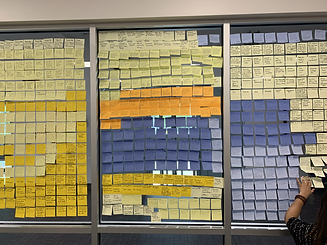
Primary and secondary research data points (both quantitative and qualitative) were separated and then organized into
emerging themes and patterns.
This process allowed us to determine that 1.) The oppressive environment of Gulfstream contributed to people's behavior, 2.) Vending machine access drove bottled water purchases, and 3.) forgetting/leaving reusable bottles at home also drove bottled water sales.
CO-CREATION
From developing concept designs to hashing out final details, we conducted three separate feedback/co-creation sessions.
Findings from these sessions evolved the team's idea of a simple installation into an in-depth service provided by SCAD.
OVERVIEW
Aiming to alleviate the additional issues of lack of common space and light & nature deprivation reported by both staff and students Bee Hydrated evolved into an oasis. The installation connects inside and outside while providing plant life to the formerly dark concrete interior of Gulfstream.
.png)
Behavior Mapping
GULFSTREAM
After compiling observational and interview data on current habits and behaviors within Gulfstream, the team concluded that Bee Hydrated should be located at the nexus of the building entryway, main hallway, and offices to fit the existing trend of taking rest breaks outside while providing continuous salience to all users, regardless of individual differences.

ERGONOMIC ELEMENTS
Components Overview

BOTTLE REFILL STATION
PERSONAS
Developed from Observational, Interview & Survey Data

MODELLING THE PRESENT
The 3 Horizons
Beliefs and Behaviors discovered during primary research were sorted into those that drove the current disposable mental model (1st Horizon), those that were neutral and/or shared by the 'disposable' and 'reusable' camps (2nd Horizon), and those that supported a new system of circularity (3rd Horizon).
These mental models formed the overall strategy for Bee Hydrated as a tactial method for achieving the 3rd Horizon

BEHAVIORAL DESIGN
Developing Tactical Design Elements
In addition to Bee Hydrated's physical location, we knew from our findings that in order to engage 'Reactants' and eventually 'Non-Reactants' Bee Hydrated needed to serve more physical and cognitive needs than just operating as a refill station.
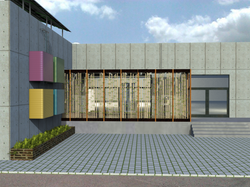
Bee Hydrated connects the industrial interior of Gulfstream to a nature-filled oasis that is connected to an outside covered seating area. The addition of two living walls, and a water wall complete with seaweed filtration system attract interest and provide a restorative experience. Clear glass and recycled glossy aluminum give the clinical feel necessary to meet user's perceptions of cleanliness, quality of taste, with the refill station being left clear to show the filtration process. The placement of solar panels and rain water catchment systems on the roof provide all necessary resources for Bee Hydrated to run smoothly.
THE INTERIOR
Experiential Overview
|  |  |
|---|
THE EXTERIOR
Experiential Overview
 |  | |
|---|---|---|
 |
B=MAT
Behavior = Motivation x Ability x Trigger
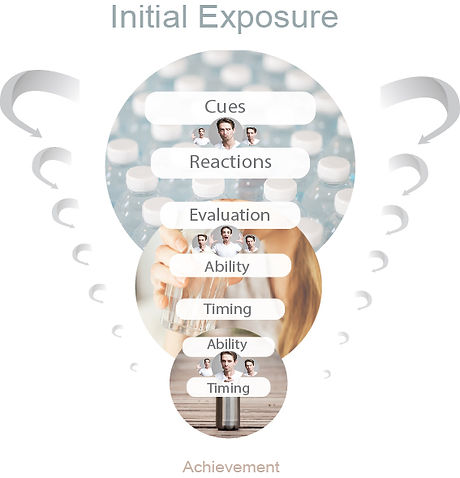
BJ Fogg's B=MAT model was utilized consistently through the design process to assess the probable successful adoption of Bee Hydrated by our different user persona groups. From conducting final design evaluation testing we generated the following overview and user flow diagram.

